6 Essential Car Fluids and How to Check Them
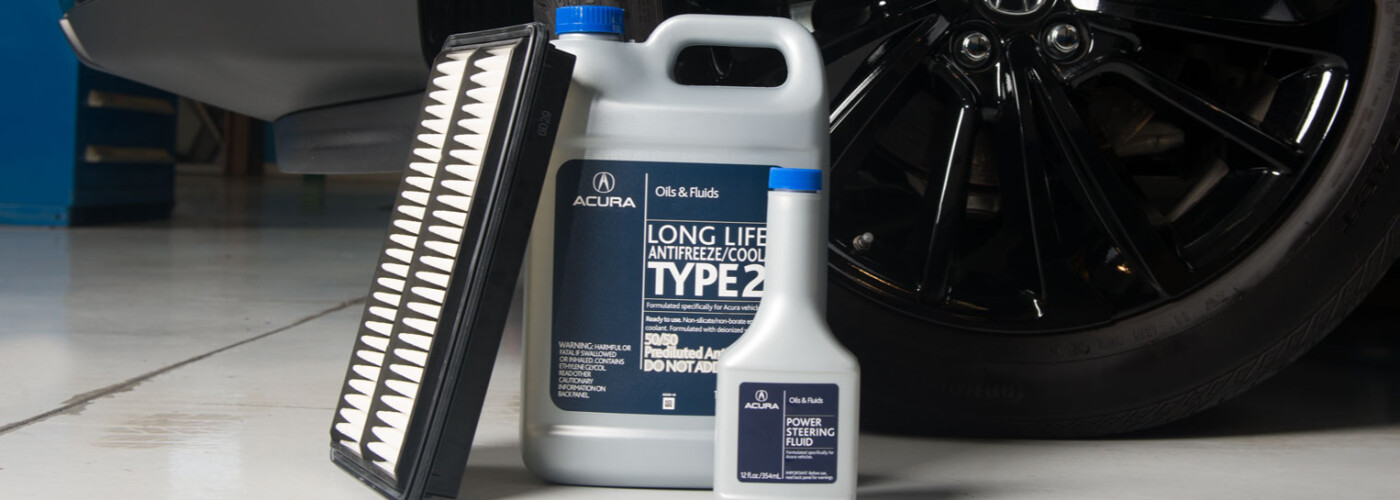
Many of your vehicle’s most critical parts rely on some type of fluid to help them function smoothly and prevent damage. Knowing how to check essential fluids in your car will help ensure its long-term health and performance, but what exactly are the essential car fluids? These six fluids are regarded as the most important ones to check routinely:
- Engine oil
- Brake fluid
- Engine coolant
- Transmission fluid
- Power steering fluid
- Windshield wiper fluid
Many Bethel Park drivers are uncertain about how and when to check car fluids, but have no fear! The Spitzer Acura service team explains the purpose of these six essential car fluids, and when and how to check them, in the guide below.
How to Check Essential Fluids in Your Car
Whether it’s windshield wiper fluid or brake fluid, regard every essential car fluid with equal importance for the safety and performance of your vehicle on the Canonsburg roads. Read below to learn when to check car fluids and how to check essential fluids in your car:
Important Note: If you’ve just driven your vehicle, allow at least 30 minutes for the engine to cool down before popping the hood to check any of these essential car fluids!
Motor Oil
- What does motor oil do?: It regulates the engine temperature and lubricates the moving parts to prevent friction.
- When to change motor oil: Change your motor oil every 7,500 to 10,000 miles or every six months.
- How to check motor oil: Locate the oil dipstick — the handle is often yellow or orange — then pull it out of its housing. Check that the oil level lines up with the marking on the dipstick, and check the color and consistency of the oil.
Brake Fluid
- What does brake fluid do?: Takes the force of your foot on the brake pedal and converts it to pressure on the brakes.
- How often to replace brake fluid: Every 30,000 miles or two years.
- How to check brake fluid: The brake fluid reservoir is transparent, so you can visually check the fluid level against the maximum fluid line.
Engine Coolant
- What does engine coolant do?: Prevents the engine from overheating.
- When to replace engine coolant: Every 50,000 miles.
- How to check engine coolant: Like brake fluid, the engine coolant reservoir is slightly transparent. All you need to do is check that the fluid level reaches the maximum line on the reservoir.
Transmission Fluid
- What does transmission fluid do?: Lubricates the transmission’s moving parts to make gear shifts smoother.
- When to replace transmission fluid: Every 30,000 to 60,000 miles.
- How to check transmission fluid: Locate the transmission fluid dipstick, situated close to where the back of the engine meets the transmission. Pull the dipstick out to check the fluid level against the marker, and check that the color is a translucent dark red. If you can’t find a dipstick, you likely have a sealed transmission that needs to be checked at a service center near Pittsburgh.
Power Steering Fluid
- What does power steering fluid do?: Power steering fluid is the fluid that makes it easy to steer and turn your vehicle.
- When to replace power steering fluid: As needed, when it becomes difficult to steer and turn or the power steering system is experiencing frequent problems.
- How to check power steering fluid: The fluid reservoir’s cap should have a ‘power steering fluid’ label and/or a steering wheel symbol. Check that the fluid line is at the marked level.
Windshield Wiper Fluid
- What does windshield wiper fluid do?: Cleans your windshield when it’s too dirty to see out of.
- When to replace windshield wiper fluid: As needed, when there’s little or no fluid coming out of the windshield sprayers.
- How to check windshield wiper fluid: The fluid reservoir’s cap has a windshield washer symbol on it. The reservoir is transparent, so you can see how much fluid is in it.
Learn More at Spitzer Acura!
Now you know how and when to check car fluids, but if you still have questions about anything, don’t hesitate to contact our service team! If any of your essential car fluids are low, schedule a service appointment to have our technicians check and replace the fluid.